
2026-10-09 · Alex 'Mac' McMillan
How To Handle Basement Water After Iowa Winter Snowmelt
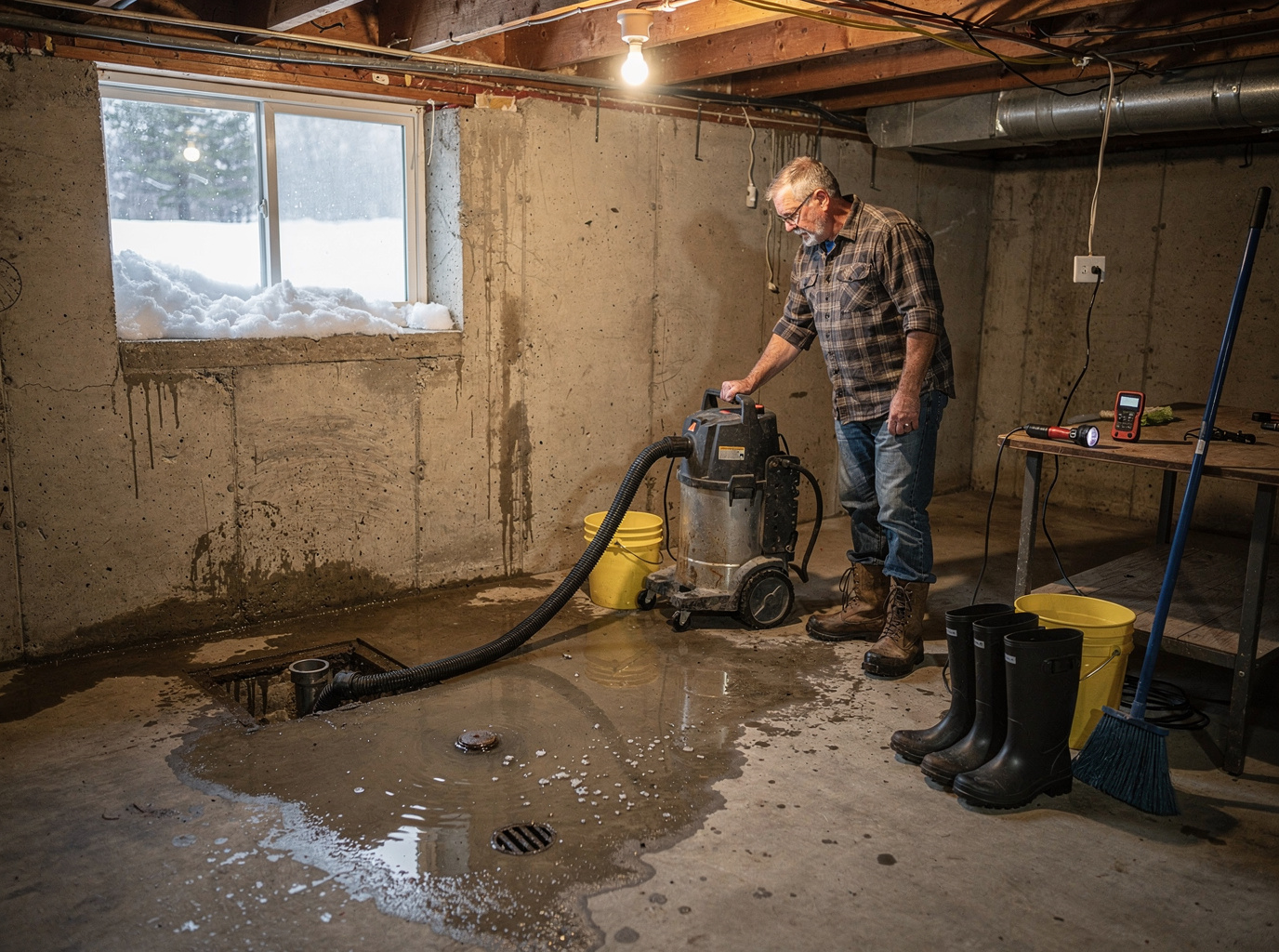
After Iowa's winter snowmelt, handling basement water effectively means a multi-pronged approach: immediate action to remove standing water, thorough drying to prevent secondary damage like mold, and proactive measures to prevent future occurrences. The amount of water can range from a small puddle to several inches, depending on the severity of the thaw and your home's existing waterproofing. Addressing it promptly, ideally within 24–48 hours, is critical to minimize structural damage and the risk of mold growth, which can become a significant issue in the humid conditions that often follow a flood.
Why Iowa Snowmelt Hits Basements Hard
Iowa's climate, with its deep freezes and significant snowfall, sets the stage for basement water issues every spring. The ground freezes several feet deep, creating a 'frost line' that acts like an impermeable barrier. When the temperatures rise and the snow begins to melt, this water has nowhere to go but over the frozen ground, often pooling around foundations. The heavy, clay-rich soils prevalent in many parts of Iowa, from the neighborhoods in Iowa City to the rural areas around Fort Dodge, exacerbate this problem. These soils don't drain well, holding moisture against your foundation walls, increasing hydrostatic pressure, and seeking any crack or weak point to enter your basement. This is particularly true for older homes in areas like Ottumwa or Fairfield, which might have foundations built without modern waterproofing techniques, making them more susceptible to seepage.
The sheer volume of water from a rapid snowmelt can be astonishing. A foot of snow can contain roughly an inch of water, and with Iowa often seeing 30–40 inches of snow in a winter, that's a lot of potential runoff. When this melts quickly, especially during a warm spell combined with spring rains, the ground simply can't absorb it fast enough. This creates a perfect storm for basement flooding, leading to issues like Foundation Wall Water Seepage or even widespread Basement Flooding After Snowmelt.
Immediate Steps When You Find Water
Discovering water in your basement after snowmelt requires a swift and systematic response. Your first priority is safety: ensure the power is off to any affected outlets or appliances before entering the flooded area to avoid electrical hazards. Once safe, identify the source of the water if possible. Is it seeping through a crack in the foundation, coming up through the floor, or entering via a window well? Knowing the entry point helps in both immediate mitigation and long-term prevention. For significant flooding, especially if it's more than an inch or two, professional Emergency Water Extraction is often necessary. We've seen basements in Coralville and North Liberty inundated after a quick thaw, and delaying extraction only compounds the damage.
After ensuring safety, begin removing as much standing water as possible. For small amounts, a wet/dry vacuum can work. For larger volumes, a sump pump (if you have one) should be running, or you may need to rent a more powerful pump. The goal is to get the bulk of the water out quickly. Even after the standing water is gone, the battle isn't over. Everything that got wet — drywall, carpet, furniture — needs to be dried out thoroughly to prevent mold. This is where proper ventilation and dehumidification come into play, a critical step often overlooked by homeowners in the rush to clean up. For comprehensive drying, especially after significant flooding, consider professional Structural Drying and Dehumidification services.
Preventing Future Snowmelt Flooding
Proactive measures are your best defense against future snowmelt-related basement flooding. Start by ensuring your gutters and downspouts are clean and extend at least 5–6 feet away from your foundation. This directs roof runoff far from your home, preventing it from pooling. Grading around your home is equally important; the ground should slope away from your foundation at a rate of at least 1 inch per foot for the first 6–10 feet. This subtle slope can dramatically reduce the amount of water accumulating near your basement walls. For homes in areas like Webster City or Humboldt, where older construction is common, regrading can be a significant but worthwhile investment.
Consider the landscaping around your home. Avoid planting shrubs or trees too close to the foundation, as their roots can sometimes compromise foundation integrity, and their watering needs can add to soil saturation. Installing a proper drainage system, such as a French drain, can also divert subsurface water away from your foundation. For persistent issues, especially in homes in areas with high water tables or heavy clay soils, internal or external waterproofing solutions might be necessary. This could involve an Interior Basement Waterproofing system with a perimeter drain and sump pump, or even Exterior Basement Waterproofing which involves excavating around the foundation to apply membranes and drainage boards. These solutions are more involved but offer robust protection against the relentless pressure of melting snow and spring rains.
Dealing with Lingering Moisture and Mold
Even after the visible water is gone, lingering moisture can lead to significant problems, most notably mold growth. Mold can start to appear within 24–48 hours in damp conditions. You might notice a musty odor or see discoloration on walls, floors, or belongings. If you suspect mold, it's crucial to address it quickly, as it can impact indoor air quality and cause health issues. Proper ventilation, using fans, and running a dehumidifier continuously for several days or even weeks after a flood are essential steps. Aim for a humidity level below 50% in your basement.